BRICS Urged to Deepen Banking Links for Local Currency Trade
x
Experts call for BRICS nations to strengthen banking ties, financial markets, and payment systems to boost local currency trade and cross-border investments.
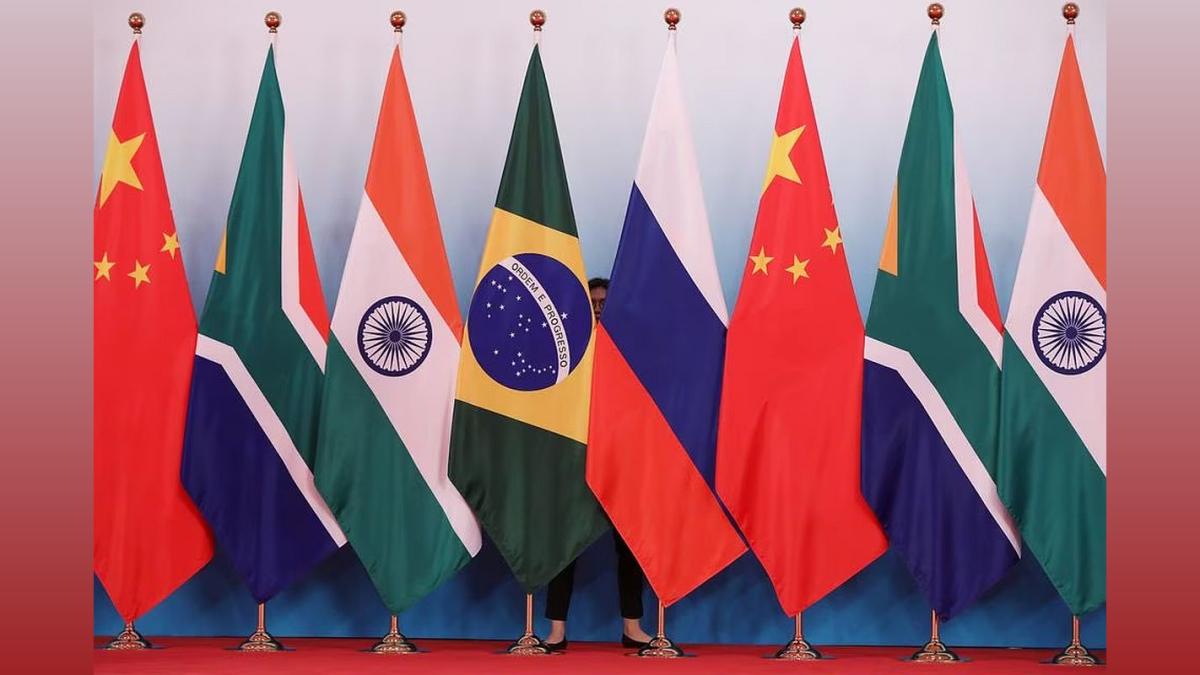
Photograph: Wu Hong/Reuters
Key Points
- BRICS nations should deepen financial markets and banking links to boost local currency trade and cross-border investments.
- Linking fast-payment platforms and exploring CBDC interoperability can make cross-border transactions faster and more secure.
- Reducing non-tariff barriers and enhancing regulatory transparency are crucial for strengthening intra-BRICS trade and supply chain resilience.
- Experts emphasize BRICS's role in fostering economic cooperation and contributing to a more balanced global economic order.
They also said that linking fast-payment platforms and exploring interoperability among Central Bank Digital Currencies could make cross-border transactions faster, cheaper, and more secure.
"One of the ways to establish this (strengthen trade in local currencies and facilitate cross-border investments) objective is to build on commitments to expand the use of local currencies in trade and investment, greater use of national currencies can support this objective, provided it is accompanied by deeper financial markets, stronger banking linkages, and robust risk-management mechanisms," Anil Talreja, Partner, Deloitte, said.
BRICS emerged as an influential grouping as it brings together 11 major emerging economies of the world, representing around 49.5 per cent of the global population, around 40 per cent of the global GDP and around 26 per cent of the global trade.
BRICS, originally comprising Brazil, Russia, India, China and South Africa, expanded in 2024 to include Egypt, Ethiopia, Iran, the United Arab Emirates and Saudi Arabia, with Indonesia joining in 2025.
Belarus, Bolivia, Kazakhstan, Cuba, Malaysia, Nigeria, Thailand, Uganda, Uzbekistan and Vietnam became BRICS partner countries last year.
Talreja also said that the member countries should focus on building an enabling trade architecture by reducing non-tariff barriers through harmonized standards, mutual recognition of certifications, simplified customs procedures, and greater regulatory transparency.
"With export and technology controls increasingly affecting global trade flows, it will create a need for greater cooperation, transparency, and predictability in trade-related regulations, as well as efforts to strengthen access to critical technologies, rare-earth minerals, advanced manufacturing equipment, and power-sector equipment through diversified and resilient supply chains," he said.
These measures would strengthen intra-BRICS trade, reduce compliance costs, and enhance supply-chain resilience.
Industry body ASSOCHAM President Nirmal Kumar Minda said that BRICS has emerged as a powerful platform for economic cooperation.
"The next phase should focus on deepening trade and investment through greater trust, transparency and business-to-business partnerships," Minda said.
He added that stronger engagement among BRICS economies can unlock new opportunities, strengthen resilience, accelerate economic diversification and contribute significantly to shaping a more balanced and inclusive new world economic order.
You May Like To Read



TODAY'S MOST TRADED COMPANIES
- Company Name
- Price
- Volume
- GMR-Airports
- 92.17 (+ 4.74)
- 41788876
- PC-Jeweller
- 14.80 (+ 6.40)
- 38066591
- Moneyview
- 62.57 (+ 8.05)
- 32150008
- Enbee-Trade-and-Fin
- 0.25 ( 0.00)
- 12337308
- Vodafone-Idea
- 12.97 (+ 1.33)
- 11950875