Chouhan Urges Scientific Rabi Sowing Amid Drought & Water Scarcity
x
Union Agriculture Minister Shivraj Singh Chouhan calls for scientific rabi season planning, urging states to factor in kharif drought, water scarcity, and climate change impacts.
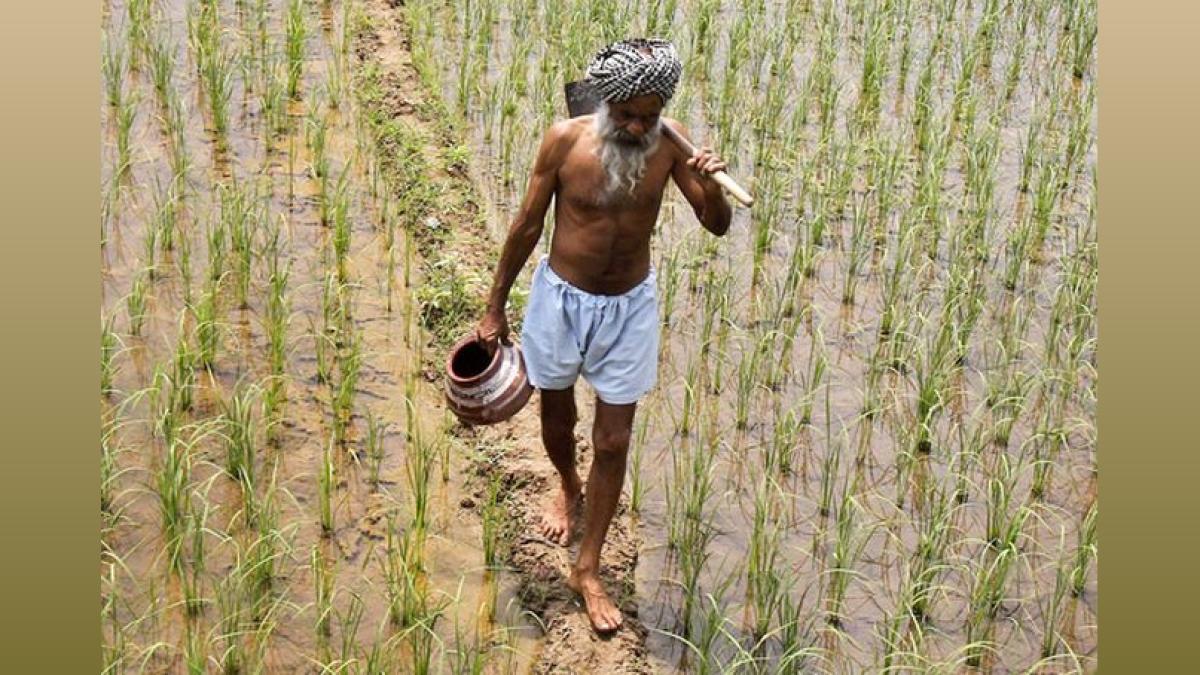
Photograph: Ajay Verma/Reuters
Key Points
- Union Agriculture Minister Shivraj Singh Chouhan urged states to plan rabi sowing scientifically, considering kharif drought and water scarcity.
- States must assess water availability and soil moisture for strategic crop selection and timely irrigation.
- Chouhan emphasized increasing cultivation of pulses and oilseeds, ensuring timely fertilizer availability, and improving procurement systems.
- He highlighted the need for equitable fertilizer distribution and addressing black marketing issues.
Addressing a two-day national conference on preparedness for the rabi (winter) season, Chouhan said, "When we speak of the Rabi season, we must also consider the Kharif season, which caused great concern because of climate change. Weather patterns have shifted."
He said kharif crops had been affected in places, though they had not failed everywhere. "In many places the crop is very good, but there is a threat of drought and water scarcity in some regions," he said, adding that rainfall had been excellent in some areas and below average in others.
"I urge state officials to approach Rabi planning scientifically by assessing water availability and soil moisture in specific regions and making advance arrangements for irrigation water," he noted.
"Since water resources are limited, we must plan strategically and must not delay preparations," he said, stressing the need to plan for pre-sowing and subsequent irrigation.
Crop selection, he said, must align with water availability rather than favour water-intensive varieties that could fail later. State teams must ensure farmers do not sow on impulse, which could lead to a crisis, he cautioned.
He also stressed moisture conservation, timely sowing and choosing the right variety. "If water is abundant, select the appropriate variety; if there is a shortage, choose accordingly," he said.
The minister asked states to draw up a comprehensive district-wise strategy for sowing pulses in rice-fallow areas, based on available soil moisture.
He said cultivation of gram (chana), lentil (masoor) and mustard should be increased using appropriate techniques in suitable regions.
Chouhan said farmers would naturally look for the most profitable crops, and the government could not succeed unless procurement systems, including government-led procurement and wider marketing strategies, were perfected.
"Wheat and paddy procurement often proceeds smoothly, but we need equally perfect planning for markets, processing, and producing export-quality crops," he said, adding that assured procurement was especially crucial for pulses and oilseeds.
Stating that fertiliser was as important as seed, Chouhan said timely sowing required timely availability and an efficient distribution system.
The Centre has begun a pilot project in two districts of each state, based on Farmer ID, to ensure fertiliser reaches farmers and cannot be exploited by unscrupulous elements, he said.
He noted that complaints of black marketing, often in the open market, were being received from various states, which pointed to a failure of the state's distribution mechanism.
Distribution must be equitable, and stock should be verified not only at the state level but down to districts and individual cooperative societies, he said.
Ministers of State for Agriculture Ramnath Thakur and Bhagirath Choudhary, Agriculture Secretary Atish Chandra and ICAR Director General M L Jat, among other senior officials, were present.
You May Like To Read



TODAY'S MOST TRADED COMPANIES
- Company Name
- Price
- Volume
- Consecutive-Comm
- 0.86 ( -13.13)
- 51327847
- Standard-Cap-Mkt
- 0.36 (+ 2.86)
- 13345585
- Welcure-DrugandPharma
- 0.20 (+ 11.11)
- 11705495
- GACM-Technologies
- 0.57 (+ 9.62)
- 9023060
- Sylph-Industries
- 0.22 (+ 4.76)
- 7798584