
Delhi Industrial Relations Rules 2025 Draft Notified
x
Delhi govt notifies draft Industrial Relations Rules 2025. Seeks stakeholder feedback on trade unions, committees, strikes, and more.
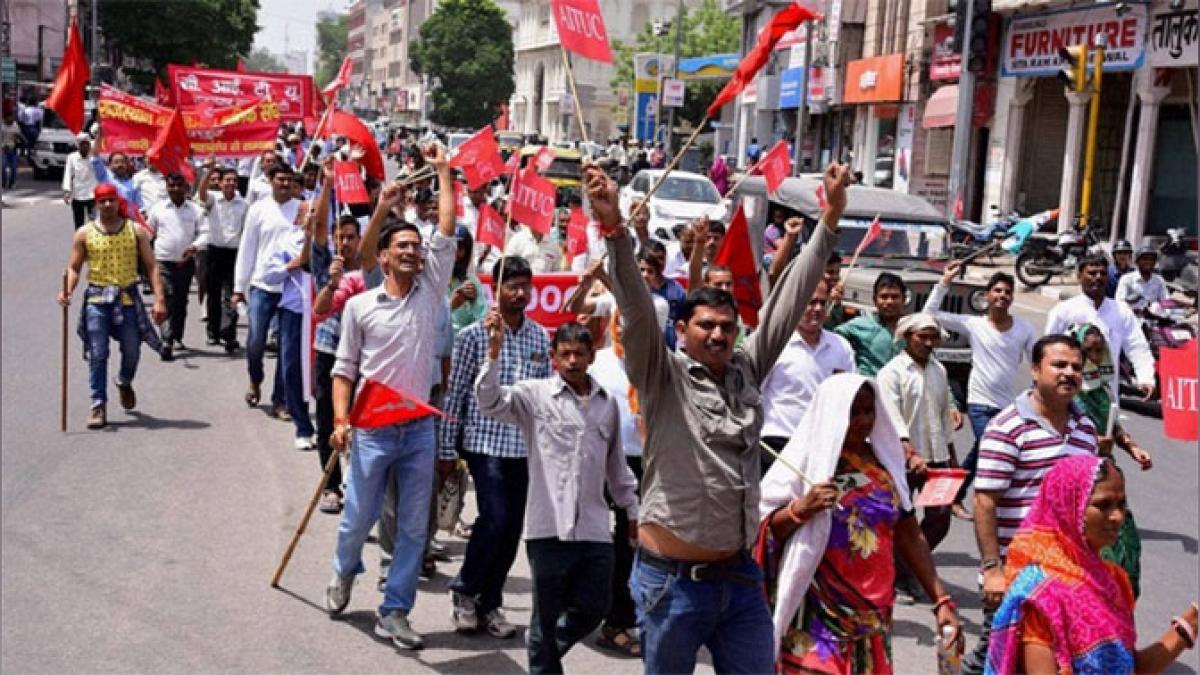
New Delhi, Dec 9 (PTI) The Delhi government has notified draft Industrial Relations (Delhi) Rules, 2025, proposing a comprehensive framework for trade unions and employers.
The draft rules have been published for stakeholder comments. Objections and suggestions can be submitted within 30 days to the Labour Department.
Under the draft norms, employers will have to constitute Works Committees with equal representation from workers and management, with membership not exceeding 20.
The draft rules also lay down provisions for the formation of Grievance Redressal Committees, specifying equal representation, mandatory inclusion of women in proportion to their workforce, and the procedure for workers to file grievances both offline and electronically.
The rules state that grievances may be raised within one year from the date on which the dispute arises.
The rules prescribe the process for trade union registration, mandatory annual audits, submission of annual returns, criteria for recognition of negotiating unions and negotiating councils, and the minimum membership requirements for recognition of State-level Trade Unions.
The rules mandate that a minimum annual subscription of Rs 100 be maintained for trade union members, and that audits be conducted by auditors authorised under the Companies Act. If a trade union has 2,500 or fewer members at any time during a financial year, then its annual accounts can be audited by any two members of the union, the rules said.
The extensive set of draft rules also details procedures for notice of strikes and lockouts, arbitration, conciliation proceedings, and the functioning of Industrial Tribunals as part of the proposed Industrial Relations (Delhi) Rules, 2025.
Under the draft, employers intending to change service conditions under the Third Schedule of the Industrial Relations Code will be required to issue a formal notice to affected workers in a prescribed format and display it prominently at the establishment. Copies must also be sent to registered trade unions.
For voluntary arbitration, the government has laid down a formal agreement process, specifying who can sign on behalf of employers and workers, and mandating written consent from arbitrators. If the government is satisfied that both sides are adequately represented, it will publish a notification enabling non-party workers and employers to present their case before the arbitrator.
The rules outline procedures for selection, tenure, salary and service conditions of Judicial Member and Administrative Members of the Industrial Tribunal. A judicial member will be appointed through a Search-cum-Selection Committee headed by the Chief Justice of the Delhi High Court or a nominated judge, and will receive a fixed monthly salary of Rs 2.25 lakh, along with Group-A level allowances. Administrative Members will receive Rs 1.75 lakh per month and must have served at least three years as Joint Secretary or above in the Delhi government.
The draft also details the process for inquiries into complaints of misconduct or incapacity against tribunal members, including mandatory preliminary scrutiny and provisions for removal on grounds such as insolvency, conviction for offences involving moral turpitude, abuse of position, or medical incapacity.
The rules also formalise procedures for strikes and lockouts. Strike notices must be given in a prescribed form by the Secretary and five elected representatives of the concerned trade union and endorsed to conciliation authorities. Employers issuing lockout notices must similarly notify labour authorities and display notices prominently.
On layoffs, retrenchment and closure, employers will be required to submit applications for permission electronically, serve copies on workers and display notices at the establishment. The government may review its orders within 30 days of granting or refusing such permissions.
The draft further proposes mechanisms for the Worker Re-skilling Fund, requiring employers to transfer the equivalent of 15 days' last drawn wages of each retrenched worker within 10 days of retrenchment, with the government transferring the amount to workers' accounts within 45 days.
The draft rules have been published for stakeholder comments. Objections and suggestions can be submitted within 30 days to the Labour Department.
Under the draft norms, employers will have to constitute Works Committees with equal representation from workers and management, with membership not exceeding 20.
The draft rules also lay down provisions for the formation of Grievance Redressal Committees, specifying equal representation, mandatory inclusion of women in proportion to their workforce, and the procedure for workers to file grievances both offline and electronically.
The rules state that grievances may be raised within one year from the date on which the dispute arises.
The rules prescribe the process for trade union registration, mandatory annual audits, submission of annual returns, criteria for recognition of negotiating unions and negotiating councils, and the minimum membership requirements for recognition of State-level Trade Unions.
The rules mandate that a minimum annual subscription of Rs 100 be maintained for trade union members, and that audits be conducted by auditors authorised under the Companies Act. If a trade union has 2,500 or fewer members at any time during a financial year, then its annual accounts can be audited by any two members of the union, the rules said.
The extensive set of draft rules also details procedures for notice of strikes and lockouts, arbitration, conciliation proceedings, and the functioning of Industrial Tribunals as part of the proposed Industrial Relations (Delhi) Rules, 2025.
Under the draft, employers intending to change service conditions under the Third Schedule of the Industrial Relations Code will be required to issue a formal notice to affected workers in a prescribed format and display it prominently at the establishment. Copies must also be sent to registered trade unions.
For voluntary arbitration, the government has laid down a formal agreement process, specifying who can sign on behalf of employers and workers, and mandating written consent from arbitrators. If the government is satisfied that both sides are adequately represented, it will publish a notification enabling non-party workers and employers to present their case before the arbitrator.
The rules outline procedures for selection, tenure, salary and service conditions of Judicial Member and Administrative Members of the Industrial Tribunal. A judicial member will be appointed through a Search-cum-Selection Committee headed by the Chief Justice of the Delhi High Court or a nominated judge, and will receive a fixed monthly salary of Rs 2.25 lakh, along with Group-A level allowances. Administrative Members will receive Rs 1.75 lakh per month and must have served at least three years as Joint Secretary or above in the Delhi government.
The draft also details the process for inquiries into complaints of misconduct or incapacity against tribunal members, including mandatory preliminary scrutiny and provisions for removal on grounds such as insolvency, conviction for offences involving moral turpitude, abuse of position, or medical incapacity.
The rules also formalise procedures for strikes and lockouts. Strike notices must be given in a prescribed form by the Secretary and five elected representatives of the concerned trade union and endorsed to conciliation authorities. Employers issuing lockout notices must similarly notify labour authorities and display notices prominently.
On layoffs, retrenchment and closure, employers will be required to submit applications for permission electronically, serve copies on workers and display notices at the establishment. The government may review its orders within 30 days of granting or refusing such permissions.
The draft further proposes mechanisms for the Worker Re-skilling Fund, requiring employers to transfer the equivalent of 15 days' last drawn wages of each retrenched worker within 10 days of retrenchment, with the government transferring the amount to workers' accounts within 45 days.
You May Like To Read





TODAY'S MOST TRADED COMPANIES
- Company Name
- Price
- Volume
- Alstone-Textiles
- 0.31 (+ 3.33)
- 100619449
- Vodafone-Idea-L
- 10.73 (+ 4.28)
- 72234499
- Mehai-Technology
- 1.83 (+ 3.98)
- 38004435
- Spicejet-Ltd
- 34.31 (+ 5.57)
- 36230618
- Murae-Organisor
- 0.28 (+ 3.70)
- 34430827
MORE NEWS

 © 2025 Rediff.com India Limited. All rights reserved. Disclaimer - Terms of Service - Privacy Policy - Feedback