FM Sitharaman: India-US Trade Pact Soon, India's Growth Strong
x
FM Nirmala Sitharaman expects early India-US trade pact, addresses China trade imbalance, and highlights India's strong economic growth & BRICS role.
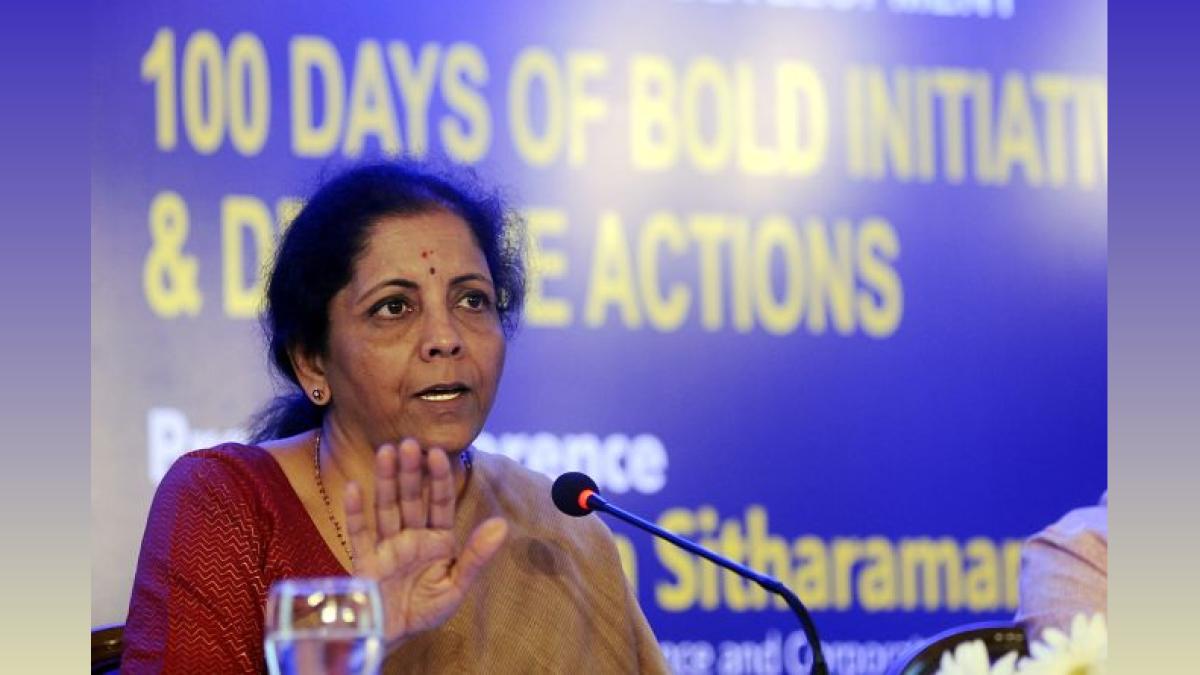
Photograph: ANI Photo
Key Points
- Finance Minister Nirmala Sitharaman hopes for an early conclusion of the India-US trade agreement.
- Sitharaman raised concerns about India's trade imbalance with China and persistent market access restrictions.
- She emphasized BRICS as a partnership for welfare and cooperation, not a counter-bloc.
- Sitharaman highlighted India's sustained strong economic growth, driven by inclusive policies and public infrastructure investment.
- Public investment in infrastructure provides a strong multiplier effect and creates employment without excessive fiscal pressure.
"I think recently the Indian Commerce Minister has also spoken that they expect and wish to have the agreement signed soon. Negotiations have been going on. I hope, in the interest of global trade and in the interest of trade between the two partners, India and US, the trade agreement gets concluded at the earliest," she said.
Commerce and Industry Minister Piyush Goyal on Thursday said the first phase of the India-US trade pact has been finalised and is undergoing legal drafting.
On trade with China, Sitharaman said the growing trade imbalance and persistent restrictions on market access for Indian products remained major concerns, despite years of engagement with Beijing.
India has consistently sought market access in China for products such as generic medicines, bovine meat, vegetables and other perishable goods, but made little progress despite years of engagement, Sitharaman said in an interaction with the Atlantic Council on the sidelines of the IMF-World Bank annual meetings in Bangkok, Thailand.
"Non-tariff barriers are the biggest hurdle in the trade between India and China," she said, adding that China had used phytosanitary measures and other non-tariff restrictions despite the potential for discussions and investigations to resolve such issues.
She said India had not adopted the approach of imposing punitive tariffs on trading partners to correct large trade imbalances, preferring instead to pursue negotiations, even if the process was time-consuming.
On BRICS, Sitharaman said the grouping should be viewed as a partnership aimed at improving the welfare of its people rather than as a platform to counter any country or bloc.
"I don't think BRICS's intention is to counter others. It is more to strengthen the partnership through the BRICS," she added.
She noted that BRICS represented nearly 40 per cent of the world's population and said cooperation among its member countries could improve trade, foster mutual understanding and expand economic opportunities.
With new members joining the grouping, 11 to 12 countries were actively engaging with one another, collectively accounting for around 45 per cent of global trade, she said.
On India's economic growth, Sitharaman said the country has sustained strong growth despite global disruptions and has been the world's fastest-growing major economy over the past four to five years, particularly after COVID-19 pandemic.
She attributed India's performance to inclusive growth, wider access to resources and skill development for young people, fiscal prudence and higher public capital expenditure.
The finance minister said public investment in infrastructure had generated a stronger multiplier effect than directly transferring equivalent amounts of money to people, while also creating employment and supporting economic activity.
Public spending on infrastructure helped channel money to people through economic activity without putting the same pressure on the fiscal deficit as some alternative forms of expenditure, she said.
Sitharaman added that government borrowing was broadly aligned with infrastructure expenditure, arguing that debt-financed asset creation was benefiting the economy.
"Borrowing goes for asset creation, and as a result, the economy has benefited," she said.
You May Like To Read



TODAY'S MOST TRADED COMPANIES
- Company Name
- Price
- Volume
- Vodafone-Idea
- 12.57 ( -3.16)
- 30233380
- Rajnish-Wellness
- 0.46 (+ 17.95)
- 18275616
- String-Metaverse
- 7.15 (+ 4.99)
- 14224257
- PC-Jeweller
- 15.51 ( -2.76)
- 12878820
- NHC-Foods
- 1.72 (+ 4.88)
- 11372189