India's Semicon 2.0: Global Chip Value Chain Ambition
x
India launches Semicon 2.0, aiming to embed itself in the global semiconductor value chain with Rs 1.27 lakh crore investment, fiscal support, and focus on design & manufacturing.
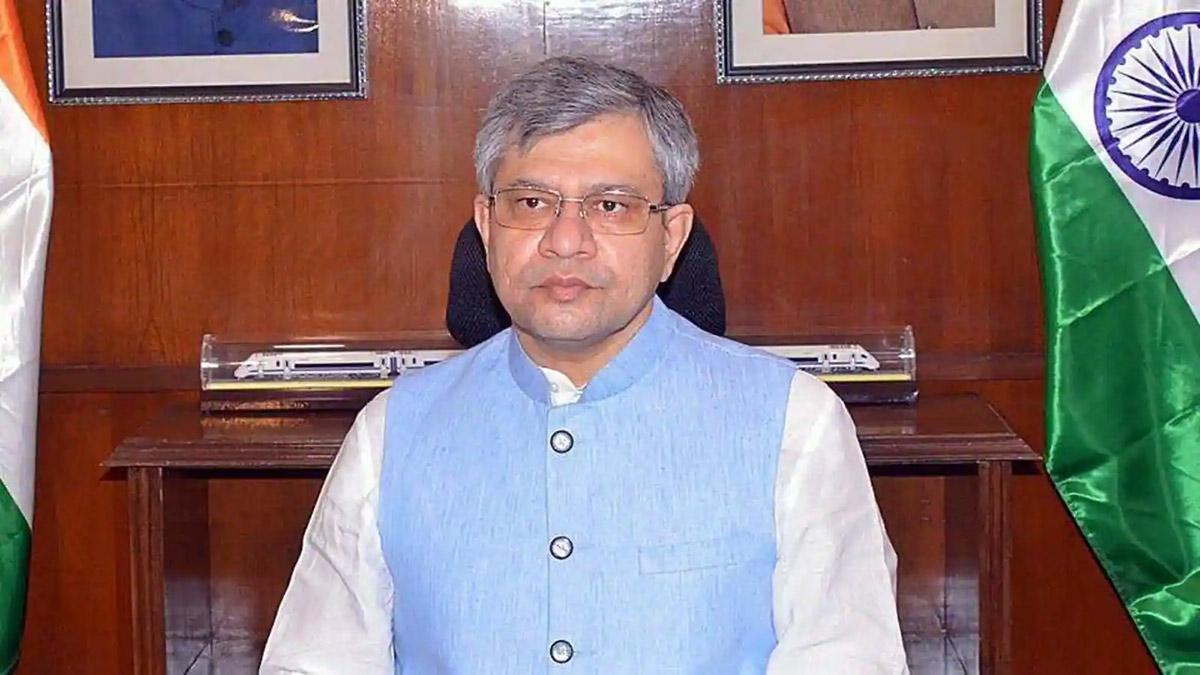
Photograph: ANI Photo
Key Points
- India's Semicon 2.0 program aims to integrate the country firmly into the global semiconductor value chain.
- The Rs 1.27 lakh crore program offers significant fiscal support for chip manufacturing, packaging, and design.
- IT Minister Ashwini Vaishnaw highlighted strong industry response and India's long-term appeal as a semiconductor hub.
- The government prioritizes quality and long-term growth potential over just fiscal incentives to build a robust chip ecosystem.
- India seeks to build indigenous capabilities across design, manufacturing, and capital equipment, targeting 10% of the global market.
Vaishnaw said the government has received a "super response" from semiconductor equipment, chemical and gas players, and added that the Semicon 2.0 programme would overall focus on ensuring that the ecosystem takes deep roots in India.
The government on Monday notified the Semicon 2.0, spelling out eligibility and incentives across semiconductor value chain, including 40 per cent fiscal support for silicon wafer fabs with a minimum investment thresholds of Rs 20,000 crore, and 35 per cent for 'compound' semiconductor and advanced packaging facilities, alongside sweeteners for chip design in form of grants, equity co-investment and royalty financing.
India's ambitious pitch to woo global investors and nurture startups working on cutting-edge chip design comes as semiconductors assume growing strategic importance globally, with the AI boom fuelling unprecedented demand for advanced chips and memory. At the same time, supply-chain vulnerabilities and geopolitical shifts are prompting companies and countries to diversify semiconductor capacity and reduce dependence on concentrated manufacturing hubs.
Vaishnaw said India is looking to be firmly embedded in the global semiconductor value chain.
Addressing the media, he said global chipmakers now view India as a credible long-term investment destination, buoyed by their experience with Semicon 1.0.
"People should become dependent on our country, on our production, on our design. That makes us really valuable in the entire (semiconductor) supply chain. That should be our goal as a country, as a government, as a community of semiconductor professionals...that is what we are aspiring," Vaishnaw said.
The Minister exuded confidence that nearly 10 per cent of the global semiconductor industry's market will be in India in the coming years.
"...and by the time we go beyond that, India will play a much bigger role," Vaishnaw said.
He further emphasised that the reduction in fiscal support in case of wafer fabs â down to 40 per cent as against 50 per cent under the previous scheme - would not put India at any disadvantage. He argued that the incentive level remains globally competitive and that the semiconductor industry's earlier doubts about investing in India have been replaced by confidence.
The Minister attributed this to the pace of approvals and project execution under Semicon 1.0, as well as India's talent pool, policy certainty and ease of doing business, which have strengthened the country's appeal as a long-term semiconductor manufacturing base.
The government will prioritise "quality over quantity", the Minister said, signalling rigorous scrutiny of proposals seeking incentives under Semicon 2.0.
Fiscal incentives are only an "incidental" part of overall semiconductor investment decisions, with global companies increasingly evaluating India on its 20-30 year growth potential, talent and policy certainty, Vaishnaw said.
"People look at a country from the perspective of what is the runway for the next 30 years. Can I develop this industry in India and keep growing over the next 20-30 years...That's the way companies look at it. Incentive structure is an incidental part of it...not the core of the entire programme. The companies look at the long-term prospects of growth in India when they make these decisions because these are extremely complex industries," the Minister said.
India has identified about 100 chips across six key technology buckets for prioritisation as it seeks to build indigenous semiconductor capabilities spanning multiple sectors, he added.
You May Like To Read





TODAY'S MOST TRADED COMPANIES
- Company Name
- Price
- Volume
- GMR-Airports
- 92.17 (+ 4.74)
- 41788876
- PC-Jeweller
- 14.80 (+ 6.40)
- 38066591
- Moneyview
- 62.57 (+ 8.05)
- 32150008
- Enbee-Trade-and-Fin
- 0.25 ( 0.00)
- 12337308
- Vodafone-Idea
- 12.97 (+ 1.33)
- 11950875