India to Release AI Regulation Paper: Safety, Deepfakes Focus
x
IT Minister Ashwini Vaishnaw announces a consultation paper on AI regulations within a month, prioritizing AI safety, human-first approach, and combating deepfakes.
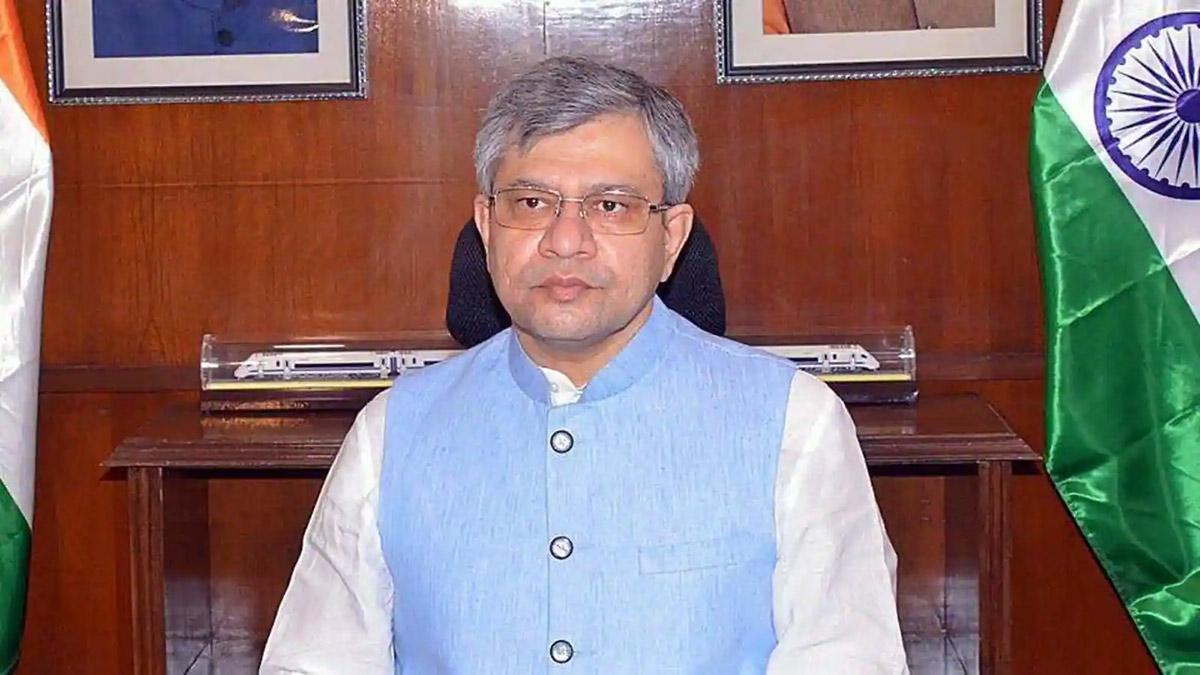
Photograph: ANI Photo
Key Points
- India's IT Minister announced a consultation paper on AI regulations within a month.
- The paper will focus on AI safety, deepfakes, and a human-first approach.
- IT Minister Vaishnaw stressed industry's primary responsibility for addressing AI harms.
- India aims for a techno-legal solution for AI regulation, not solely law.
- The government plans significant GPU procurement and indigenous AI chip development.
The move assumes significance as concerns over deepfakes, cyber threats and the psychological effects of AI chatbots are growing, and leading researchers have repeatedly called for stronger safeguards. Across the world, governments and regulators are racing to keep pace with fast-moving AI, with the European Union already enacting a comprehensive AI Act.
Vaishnaw noted that deepfakes are a "nuisance which can cause huge problems in society", and added that their quality is improving every day.
"People believe them, and it sets a totally wrong precedent. It sets a totally wrong narrative, and people get lured into doing wrong things and believing wrong things," he said, adding the upcoming consultation paper would deal with AI harms and deepfakes as a big area of focus.
"I'll request the department to come out with a regulation-focused consultation paper, which focuses on safety. That's the most important point...safety-related to AI use," Vaishnaw said while speaking at an event on the release of the World Development Report.
The India Launch of the World Development Report 2026: The Promise of Artificial Intelligence was organised by the Ministry of Electronics and Information Technology (MeitY), through the IndiaAI Mission, in collaboration with the World Bank Group.
Vaishnaw further said that the upcoming consultation paper will form the basis for AI regulations, and added that thetime has come for India to have such a framework.
Other issues that the consultation paper would prioritise are AI harms, including deepfakes, a human-first approach, skilling, as well as a commitment to leave no person behind, the Minister elaborated.
"Humanity has to be the most important part of change that has happened," Vaishnaw said.
Government has always maintained that AI and other technologies cannot be regulated by law alone, he said, adding, "We have to bring a techno-legal solution.
Vaishnaw made it clear that the industry must shoulder the bulk of the responsibility. "The industry has to take the primary responsibility," he said, listing out issues such as cybersecurity, safety, user harm, psychological disorders and deepfakes.
"So we'll come out with that paper in a month's time from now, and based on that we'll go forward with the regulation," Vaishnaw said.
On the government's own use of AI, the Minister said that an empanelment approach for AI models or potential solutions is being followed.
"The approach we have followed is we will be empanelling some of the models or the potential solutions. We'll have an empanelment process. It won't be a tender process," he said.
Explaining this, Vaishnaw said once the empanelment is done, the selected firms or startupscan then participate in a tender from agovernment department that wants to use AI technology.
As such, there is a growing unease over AI harms after global researchers and safety experts at leading AI companies, including OpenAI and Anthropic, recently went public with stark warnings about the potential risks from increasingly powerful frontier models, with some raising the spectre of catastrophic consequences for humanity from AI risks.
The US has opposed calls for a halt, though, with the Donald Trump administration arguing that slowing AI development could undermine US tech leadership and hand an edge to China.
India has been tightening IT rules to firmly crack down on AI deepfakes.
In February this year, the government brought in stricter obligations for online platforms on handling AI-generated and synthetic content, including deepfakes, saying platforms, such as X and Instagram, must take down within three hours any such content flagged by a competent authority or court.
The government notified amendments to the Information Technology (Intermediary Guidelines and Digital Media Ethics Code) Rules, 2021, that formally define AI-generated and synthetic content.
The amendments defined "audio, visual or audio-visual information" and "synthetically-generated information", covering AI-created or altered content that appears real or authentic. Routine editing, accessibility improvements, and good-faith educational or design work have been excluded from this definition.
The Centre also mooted stricter disclosure norms for AI-generated content, proposing tweaks to IT rules that would require clear and continuous labels identifying synthetically generated information to be visible throughout the entire duration of the visual display.
On Thursday, Vaishnaw said that the government is also going for a long-term procurement, and towards this an RFP has been issued. "... Five-year long-term supply agreement, so that the industry can then be assured of the demand which comes. Our demand estimate is for 10,000 GPUs, and the first tender that we are coming out is for 5000 (GPUs)," he said.
Vaishnaw said the government is also working on indigenous chips under its semiconductor programme, with the aim of developing Indian GPUs, at least for inference, over the next few years. "That roadmap looks visible now," he said.
You May Like To Read



TODAY'S MOST TRADED COMPANIES
- Company Name
- Price
- Volume
- Consecutive-Comm
- 0.86 ( -13.13)
- 51327847
- Standard-Cap-Mkt
- 0.36 (+ 2.86)
- 13345585
- Welcure-DrugandPharma
- 0.20 (+ 11.11)
- 11705495
- GACM-Technologies
- 0.57 (+ 9.62)
- 9023060
- Sylph-Industries
- 0.22 (+ 4.76)
- 7798584