
Indian Rice Exports: US Tariff Threat & Impact
x
Indian rice exporters downplay US tariff threat, reject dumping charge. Demand steady, export volumes small. Impact on US consumers.
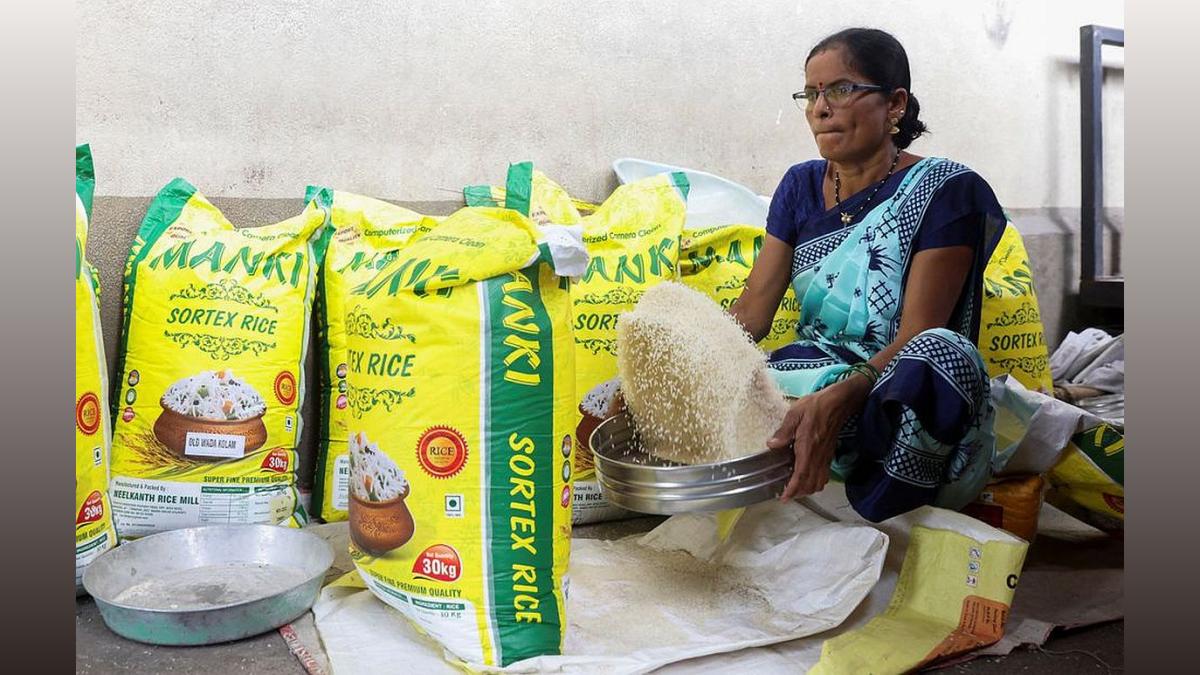
Photograph: Francis Mascarenhas/Reuters
Kolkata, Dec 9 (PTI) Indian rice exporters on Tuesday said the US threat of imposing additional tariffs on Indian rice is "not a major concern", asserting that demand remains steady and the export volumes to America are too small to significantly impact the sector.
India Rice Exporter Federation President Prem Garg said exports of basmati rice to the US account for less than 3 per cent of the country's six million tonne annual shipments, while the US share in India's total rice exports -- around 21 million tonne -- is below one per cent.
"The US market is not large in our overall export basket and other new markets are also growing," he said.
Garg reiterated that allegations by US officials of India "dumping" rice are "completely wrong", noting that the US imports only about 2.7 lakh tonne of Indian rice annually, a small volume compared to India's global footprint.
His remarks come amid discussions in Washington on levying additional duties on Indian rice, which already attracts a 50 per cent tariff. The duty, which began at 10 per cent six months ago before rising to 25 per cent and then 50 per cent over the last three months, has had "no demand impact", Garg said.
"Exports in November are similar to last year," he added.
Industry players said any further tariff hike will primarily be borne by American consumers.
Ricevilla Group CEO Suraj Agarwal said Indian basmati and premium non-basmati varieties exported to the US are essential staples for Asian and Middle Eastern communities.
"These are necessity items, not luxury goods. Demand impact will be negligible. Only US consumers will bear the brunt of any additional tariff," he said.
India, which supplies 40 per cent of global rice exports and ships to 172 countries, continues to see robust demand. While Gulf countries remain key markets for basmati, African nations have emerged as fast-growing buyers.
Benin, for instance, imported over 60,000 tonnes of basmati last year -- a new market expanding "very fast", Garg said.
Russia has also begun purchasing basmati, moving beyond its traditional focus on non-basmati varieties. Even major rice-producing countries like Brazil and Thailand are importing Indian basmati, he stated.
Garg said India has overtaken China to become the world's largest rice producer, and domestic output is likely to grow by 4-5 per cent next year as farmers receive better prices.
India Rice Exporter Federation President Prem Garg said exports of basmati rice to the US account for less than 3 per cent of the country's six million tonne annual shipments, while the US share in India's total rice exports -- around 21 million tonne -- is below one per cent.
"The US market is not large in our overall export basket and other new markets are also growing," he said.
Garg reiterated that allegations by US officials of India "dumping" rice are "completely wrong", noting that the US imports only about 2.7 lakh tonne of Indian rice annually, a small volume compared to India's global footprint.
His remarks come amid discussions in Washington on levying additional duties on Indian rice, which already attracts a 50 per cent tariff. The duty, which began at 10 per cent six months ago before rising to 25 per cent and then 50 per cent over the last three months, has had "no demand impact", Garg said.
"Exports in November are similar to last year," he added.
Industry players said any further tariff hike will primarily be borne by American consumers.
Ricevilla Group CEO Suraj Agarwal said Indian basmati and premium non-basmati varieties exported to the US are essential staples for Asian and Middle Eastern communities.
"These are necessity items, not luxury goods. Demand impact will be negligible. Only US consumers will bear the brunt of any additional tariff," he said.
India, which supplies 40 per cent of global rice exports and ships to 172 countries, continues to see robust demand. While Gulf countries remain key markets for basmati, African nations have emerged as fast-growing buyers.
Benin, for instance, imported over 60,000 tonnes of basmati last year -- a new market expanding "very fast", Garg said.
Russia has also begun purchasing basmati, moving beyond its traditional focus on non-basmati varieties. Even major rice-producing countries like Brazil and Thailand are importing Indian basmati, he stated.
Garg said India has overtaken China to become the world's largest rice producer, and domestic output is likely to grow by 4-5 per cent next year as farmers receive better prices.
You May Like To Read

TODAY'S MOST TRADED COMPANIES
- Company Name
- Price
- Volume
- Alstone-Textiles
- 0.31 (+ 3.33)
- 100619449
- Vodafone-Idea-L
- 10.73 (+ 4.28)
- 72234499
- Mehai-Technology
- 1.83 (+ 3.98)
- 38004435
- Spicejet-Ltd
- 34.31 (+ 5.57)
- 36230618
- Murae-Organisor
- 0.28 (+ 3.70)
- 34430827
MORE NEWS

 © 2025 Rediff.com India Limited. All rights reserved. Disclaimer - Terms of Service - Privacy Policy - Feedback