Lowering Flying Costs Key to Indian Aviation Growth: Air India
x
Air India executive Nipun Aggarwal states reducing high taxes on Indian aviation will drive disruptive growth, boosting passenger traffic and regional connectivity.

Key Points
- Reducing the high cost of flying in India is essential for disruptive growth and a significant increase in air passenger traffic.
- Better utilization of non-metro airports requires improved regional connectivity, especially in Tier 2 and Tier 3 cities.
- Air India sees vast growth potential in both regional routes and the long-haul market, where Indian carriers currently hold a small share.
- Domestic passenger traffic is projected to reach 1.1 billion by 2040, indicating massive future demand.
The country is one of the world's fastest domestic civil aviation markets, and Indian carriers are expanding their fleets to meet their rising traffic demand.
"We unfortunately treat aviation as a luxury good... it is so heavily taxed. If we can bring down that cost of flying for the average Indian, make air travel more affordable, then.. there will be disruptive growth, and there will be a big jump in the numbers that we see today," Air India's Chief Commercial Officer and Air India Express Chairman Nipun Aggarwal said.
While mentioning that a great job has been done in building airports, Aggarwal also said that outside the metros and big cities, utilisation of airports is very low and "we need to ensure that those airports are utilised and that will only happen when your regional connectivity, Tier 2, Tier 3 connectivity picks up".
"Air India for now is focused on the long haul traffic. Our network is geared more towards the hubs..., but as we grow and as we expand in future, we believe there is an opportunity in Tier 2, Tier 3 cities as well. For that, you need a regional jet or smaller aircraft, and that will come over time," he said.
The annual domestic passenger traffic, which was at 340 million in FY26, is projected to touch 1.1 billion by 2040, according to estimates.
According to Aggarwal, there is also a huge headroom for growth in the long-haul market for Air India.
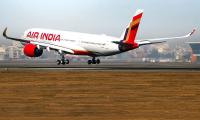
With a fleet of around 60 wide-body planes, Air India operates long-haul and ultra-long-haul flights.
"That (long haul) market is about 25-30 million passengers annually, which is maybe not even 20 per cent of the overall passengers that are there in the Indian aviation market. But in terms of revenue contributions, the long-haul market is more than 50 per cent of the revenue mix.
"In that market, the share of Indian carriers is less than 20 per cent. So, there is a huge headroom for Indian carriers to grow in that market," he said.
Aggarwal was speaking at a session at a conference organised by engine maker GE Aerospace in Gurugram.
You May Like To Read



TODAY'S MOST TRADED COMPANIES
- Company Name
- Price
- Volume
- Consecutive-Comm
- 0.86 ( -13.13)
- 51327847
- Standard-Cap-Mkt
- 0.36 (+ 2.86)
- 13345585
- Welcure-DrugandPharma
- 0.20 (+ 11.11)
- 11705495
- GACM-Technologies
- 0.57 (+ 9.62)
- 9023060
- Sylph-Industries
- 0.22 (+ 4.76)
- 7798584