
Data Protection Act: Threat to RTI & Press Freedom?
x
Civil rights & journalist bodies raise concerns over the Digital Personal Data Protection Act, fearing it may curb RTI and press freedom. Experts highlight vague provisions and potential misuse.
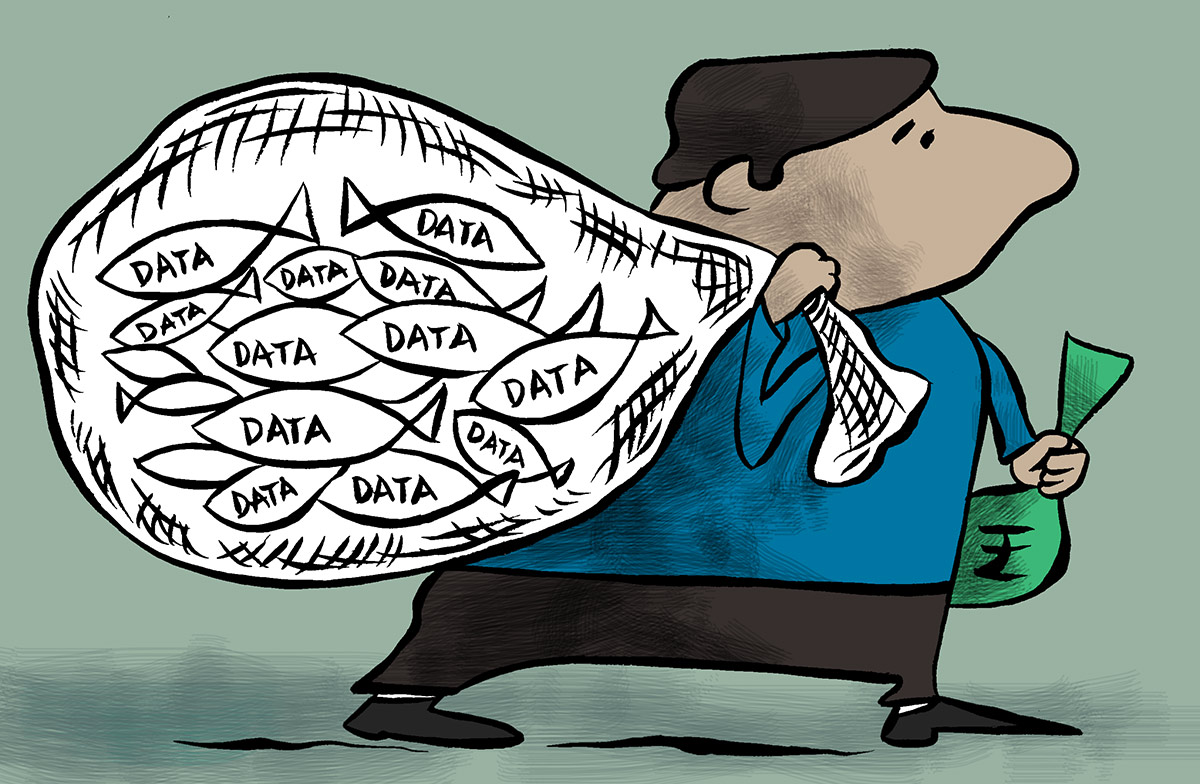
Photograph: Uttam Ghosh/Rediff.com
New Delhi, Jul 30 (PTI) Civil rights and journalist bodies on Wednesday expressed apprehension over the Digital Personal Data Protection Act, saying the provisions under it may fail the Right to Information Act and end press freedom.
Supreme Court lawyer and convenor of The Campaign for Judicial Accountability & Judicial Reforms (CJAR), Prashant Bhushan alleged that the Act bars and amends RTI Act to stop sharing of personal identifiable information without consent.
He said that the provision not only kills the Right to Information Act but also discourages journalists and whistleblowers from exposing the names of corrupt officials without their consent.
"The definitions contained in the Act of data fiduciary, data principal, data processing that anyone be it an activist who seeks personal information through RTI or journalist or a whistleblower attempts to expose corrupt officials then it can be considered an offence under the Act," Bhushan said.
He said the Act gives all sorts of power to the government and they may selectively target media houses exposing wrong deeds of the ruling government.
According to civil rights bodies and activists, the DPDP Act removes provisions under the RTI Act that will enable government bodies to withhold information under the garb of personal information.
Former High Court Justice AP Shah in an open letter to Attorney General of India on July 28 said that Section 44(3) of the DPDP Act replaces the narrowly tailored exemption in Section 8(1)(j) with an overbroad provision for withholding information, and removing the "public interest override.
"This enables public authorities to deny information simply by classifying it as 'personal,' regardless of its public relevance or importance," he said.
National Campaign for People's Right to Information (NCPRI), co-convenor, Anjali Bharadwaj said that RTI empowers people to get to know where their files are stuck, contractor associated with public projects, surveys to check beneficiaries under the scheme and to verify if they have received the benefits etc.
She said that all these things will be stopped under the garb of restrictions imposed on seeking personal identifiable data under data protection rules.
"There are no specific exemptions to journalists under the Act which was clearly mentioned under the previous drafts. There is a clear demand to add exemptions for journalists under the rules, or else press freedom will end," Bharadwaj said.
She said that the act gives complete power to the government to control the Data Protection Board that has power to impose upto Rs 500 crore.
"No government should be given as much discretion as this act gives to them. At present, there is a BJP government; tomorrow, there may be some other government. The act should not give excess power to any government to use the provisions at their sole discretion," Bharadwaj said.
Press Club of India, Vice-President, Sangeeta Barooah Pisharoty said the elected representatives of journalist bodies met the Ministry of Electronics and IT Secretary on July 28 and handed him a memorandum signed by over 1,000 journalists expressing concern over the DPDP Act.
"Earlier drafts had a line which said that journalistic work will be exempted but it was dropped. We are asking the government to bring in an amendment that is our primary demand and include that line because it will directly impact our works," Pisharoty said.
She said that there is hope that the ministry will listen to the demands of journalists.
"This is a rightful demand. This is something that we are very keen on and we are not going to step back. We also told the authorities that we should not be pushed to a situation where we come to the street or go looking for a legal option," Pisharoty said.
Internet Freedom Foundation, Director, Apar Gupta said that the wording of the rules is vague and has a lot of chances for misuse against journalists.
The Digital Personal Data Protection (DPDP) Act, 2023 is a comprehensive data privacy law to regulate the processing of digital personal data. Draft Digital Personal Data Protection Rules, 2025, which aim to operationalise the act, were published for public consultation, inviting 6,915 feedback/inputs from citizens and stakeholders, according to an official release.
Supreme Court lawyer and convenor of The Campaign for Judicial Accountability & Judicial Reforms (CJAR), Prashant Bhushan alleged that the Act bars and amends RTI Act to stop sharing of personal identifiable information without consent.
He said that the provision not only kills the Right to Information Act but also discourages journalists and whistleblowers from exposing the names of corrupt officials without their consent.
"The definitions contained in the Act of data fiduciary, data principal, data processing that anyone be it an activist who seeks personal information through RTI or journalist or a whistleblower attempts to expose corrupt officials then it can be considered an offence under the Act," Bhushan said.
He said the Act gives all sorts of power to the government and they may selectively target media houses exposing wrong deeds of the ruling government.
According to civil rights bodies and activists, the DPDP Act removes provisions under the RTI Act that will enable government bodies to withhold information under the garb of personal information.
Former High Court Justice AP Shah in an open letter to Attorney General of India on July 28 said that Section 44(3) of the DPDP Act replaces the narrowly tailored exemption in Section 8(1)(j) with an overbroad provision for withholding information, and removing the "public interest override.
"This enables public authorities to deny information simply by classifying it as 'personal,' regardless of its public relevance or importance," he said.
National Campaign for People's Right to Information (NCPRI), co-convenor, Anjali Bharadwaj said that RTI empowers people to get to know where their files are stuck, contractor associated with public projects, surveys to check beneficiaries under the scheme and to verify if they have received the benefits etc.
She said that all these things will be stopped under the garb of restrictions imposed on seeking personal identifiable data under data protection rules.
"There are no specific exemptions to journalists under the Act which was clearly mentioned under the previous drafts. There is a clear demand to add exemptions for journalists under the rules, or else press freedom will end," Bharadwaj said.
She said that the act gives complete power to the government to control the Data Protection Board that has power to impose upto Rs 500 crore.
"No government should be given as much discretion as this act gives to them. At present, there is a BJP government; tomorrow, there may be some other government. The act should not give excess power to any government to use the provisions at their sole discretion," Bharadwaj said.
Press Club of India, Vice-President, Sangeeta Barooah Pisharoty said the elected representatives of journalist bodies met the Ministry of Electronics and IT Secretary on July 28 and handed him a memorandum signed by over 1,000 journalists expressing concern over the DPDP Act.
"Earlier drafts had a line which said that journalistic work will be exempted but it was dropped. We are asking the government to bring in an amendment that is our primary demand and include that line because it will directly impact our works," Pisharoty said.
She said that there is hope that the ministry will listen to the demands of journalists.
"This is a rightful demand. This is something that we are very keen on and we are not going to step back. We also told the authorities that we should not be pushed to a situation where we come to the street or go looking for a legal option," Pisharoty said.
Internet Freedom Foundation, Director, Apar Gupta said that the wording of the rules is vague and has a lot of chances for misuse against journalists.
The Digital Personal Data Protection (DPDP) Act, 2023 is a comprehensive data privacy law to regulate the processing of digital personal data. Draft Digital Personal Data Protection Rules, 2025, which aim to operationalise the act, were published for public consultation, inviting 6,915 feedback/inputs from citizens and stakeholders, according to an official release.
You May Like To Read

TODAY'S MOST TRADED COMPANIES
- Company Name
- Price
- Volume
- Vodafone-Idea
- 11.36 ( -2.49)
- 94664837
- AvanceTechnologies
- 1.16 (+ 4.50)
- 34522155
- Sunshine-Capital
- 0.26 ( -3.70)
- 29015901
- Alstone-Textiles
- 0.27 ( -3.57)
- 28695959
- Mehai-Technology
- 1.65 ( -4.62)
- 28262795
MORE NEWS


 © 2025 Rediff.com India Limited. All rights reserved. Disclaimer - Terms of Service - Privacy Policy - Feedback