
Nasscom on New Labour Codes: Modernizing India's Framework
x
Nasscom hails new labour codes as a key milestone in modernizing India's labour framework, offering predictability for the tech industry.
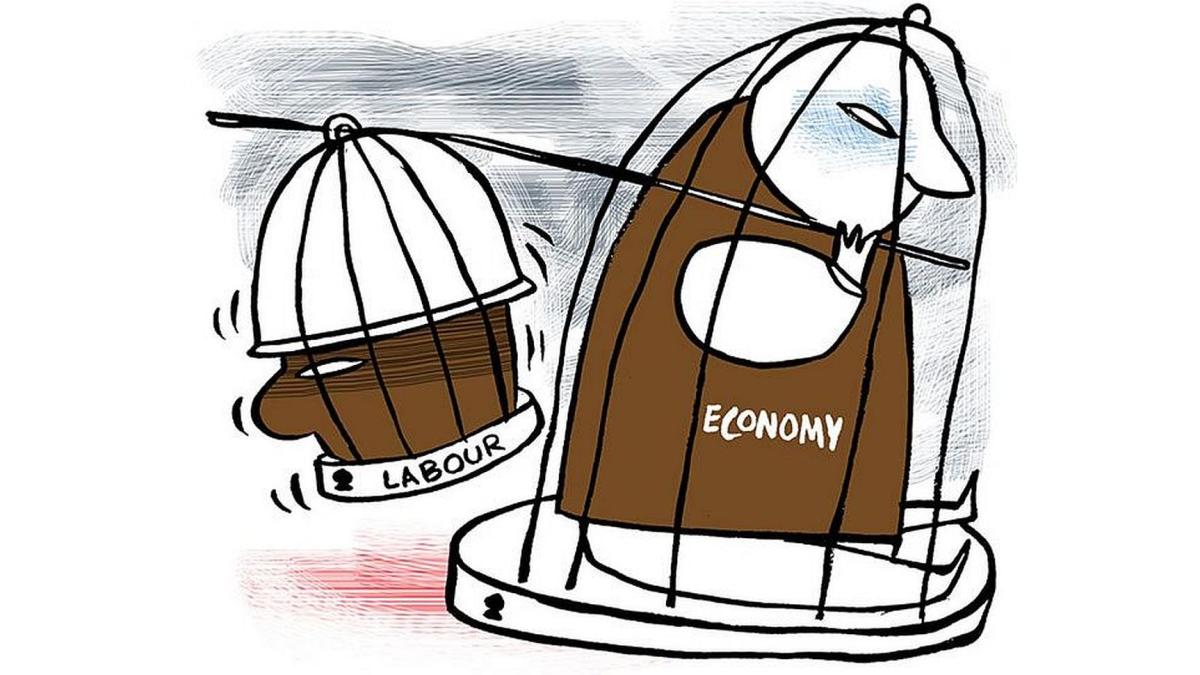
Illustration: Uttam Ghosh/Rediff.com
New Delhi, Nov 21 (PTI) The four labour codes notified by the government mark a key milestone in India's ongoing effort to modernise its labour framework, Nasscom said on Friday, adding that for the technology industry and its workforce, the eventual full implementation can spell greater predictability and transparency.
Provisions on written appointment letters, fixed-term employment with parity of benefits, expanded coverage of social security, recognition of gig and platform work and specific attention to timely salary payments, equal pay and structured grievance mechanisms for IT and IT-enabled services are particularly relevant to a skilled and mobile talent base, the apex tech industry body said in a statement.
As rules are finalised, Nasscom said it will focus on supporting a smooth and practical transition for the industry.
"A key priority will be to help ensure that the central framework under the Codes is harmonised with state-level requirements, including shops and establishments laws, so that overlapping obligations and unintended compliance challenges do not arise," it said.
The Government's notification bringing key provisions of the four Labour Codes into effect from November 21, 2025, marks an important milestone in India's ongoing effort to modernise its labour framework, it observed.
Nasscom said it will continue to work closely with the Ministry of Labour and Employment and other stakeholders to provide clear guidance to industry and to encourage the use of streamlined technology-enabled compliance solutions as part of a broader, modern labour ecosystem.
"India now has an opportunity to translate this consolidation of labour legislation into a balanced and implementation-friendly regime," it said.
The association asserted it is committed to engaging constructively with government and industry "to help realise this ambition in a way that supports workers, enables sustainable business growth and strengthens India's position in the global technology landscape.
In a landmark move, the government on Friday implemented the four Labour Codes, pending since 2020, introducing worker-friendly measures like a timely minimum wage for all and universal social security, including gig and platform workers, while allowing longer work hours, broader fixed-term employment, and employer-friendly retrenchment rules.
While the four Labour Codes -- the Code of Wages (2019, Industrial Relations Code (2020), Code on Social Security (2020) and Occupational Safety, Health and Working Conditions Code (2020), which were passed by Parliament five years back -- were notified on Friday to replace 29 fragmented laws with a unified and modern framework, rules that will bring them into force with immediate effect will be issued shortly.
Key reforms include mandatory appointment letters to workers to ensure formalisation and job security; universal social security coverage, including to gig, platform, contract, and migrant workers, with PF, ESIC, and insurance benefits; statutory minimum wages and timely payment across all sectors; expanded rights and safety for women, including night-shift work and mandatory grievance committees; and free annual health check-ups for workers aged 40 and above.
Nasscom said that for business leaders, the move to the new framework is structured and sequenced, not abrupt, and it hoped for a smooth transition.
"Based on the notifications, organisations retain continuity while they familiarise themselves with the notified provisions and prepare systems and processes for the next stages of implementation. This journey also builds on reforms already undertaken by several states," Nasscom noted.
From a broader economic perspective, the codes seek to expand social security, strengthen workplace safety and health, and bring greater clarity to wages and employment terms, it further noted.
"The move towards single registration, a single licence and a single return, supported by a national occupational safety and health board, should simplify compliance and make enforcement more consistent," Nasscom added.
Provisions on written appointment letters, fixed-term employment with parity of benefits, expanded coverage of social security, recognition of gig and platform work and specific attention to timely salary payments, equal pay and structured grievance mechanisms for IT and IT-enabled services are particularly relevant to a skilled and mobile talent base, the apex tech industry body said in a statement.
As rules are finalised, Nasscom said it will focus on supporting a smooth and practical transition for the industry.
"A key priority will be to help ensure that the central framework under the Codes is harmonised with state-level requirements, including shops and establishments laws, so that overlapping obligations and unintended compliance challenges do not arise," it said.
The Government's notification bringing key provisions of the four Labour Codes into effect from November 21, 2025, marks an important milestone in India's ongoing effort to modernise its labour framework, it observed.
Nasscom said it will continue to work closely with the Ministry of Labour and Employment and other stakeholders to provide clear guidance to industry and to encourage the use of streamlined technology-enabled compliance solutions as part of a broader, modern labour ecosystem.
"India now has an opportunity to translate this consolidation of labour legislation into a balanced and implementation-friendly regime," it said.
The association asserted it is committed to engaging constructively with government and industry "to help realise this ambition in a way that supports workers, enables sustainable business growth and strengthens India's position in the global technology landscape.
In a landmark move, the government on Friday implemented the four Labour Codes, pending since 2020, introducing worker-friendly measures like a timely minimum wage for all and universal social security, including gig and platform workers, while allowing longer work hours, broader fixed-term employment, and employer-friendly retrenchment rules.
While the four Labour Codes -- the Code of Wages (2019, Industrial Relations Code (2020), Code on Social Security (2020) and Occupational Safety, Health and Working Conditions Code (2020), which were passed by Parliament five years back -- were notified on Friday to replace 29 fragmented laws with a unified and modern framework, rules that will bring them into force with immediate effect will be issued shortly.
Key reforms include mandatory appointment letters to workers to ensure formalisation and job security; universal social security coverage, including to gig, platform, contract, and migrant workers, with PF, ESIC, and insurance benefits; statutory minimum wages and timely payment across all sectors; expanded rights and safety for women, including night-shift work and mandatory grievance committees; and free annual health check-ups for workers aged 40 and above.
Nasscom said that for business leaders, the move to the new framework is structured and sequenced, not abrupt, and it hoped for a smooth transition.
"Based on the notifications, organisations retain continuity while they familiarise themselves with the notified provisions and prepare systems and processes for the next stages of implementation. This journey also builds on reforms already undertaken by several states," Nasscom noted.
From a broader economic perspective, the codes seek to expand social security, strengthen workplace safety and health, and bring greater clarity to wages and employment terms, it further noted.
"The move towards single registration, a single licence and a single return, supported by a national occupational safety and health board, should simplify compliance and make enforcement more consistent," Nasscom added.
You May Like To Read



TODAY'S MOST TRADED COMPANIES
- Company Name
- Price
- Volume
- Pulsar-Intl
- 0.63 ( 0.00)
- 15065257
- Vodafone-Idea
- 13.91 (+ 1.24)
- 11916644
- Jaiprakash-Power-Ven
- 19.24 (+ 2.50)
- 3753600
- Evexia-Lifecare
- 1.63 (+ 4.49)
- 3463379
- Standard-Cap-Mkt
- 0.38 ( 0.00)
- 2554381
MORE NEWS


 © 2026 Rediff.com India Limited. All rights reserved. Disclaimer - Terms of Service - Privacy Policy - Feedback