
Pakistan Economy: IMF Projections & Debt Burden
x
IMF projects Pakistan's economy regains stability but faces high debt, weak investment, and slow employment growth. Details inside.
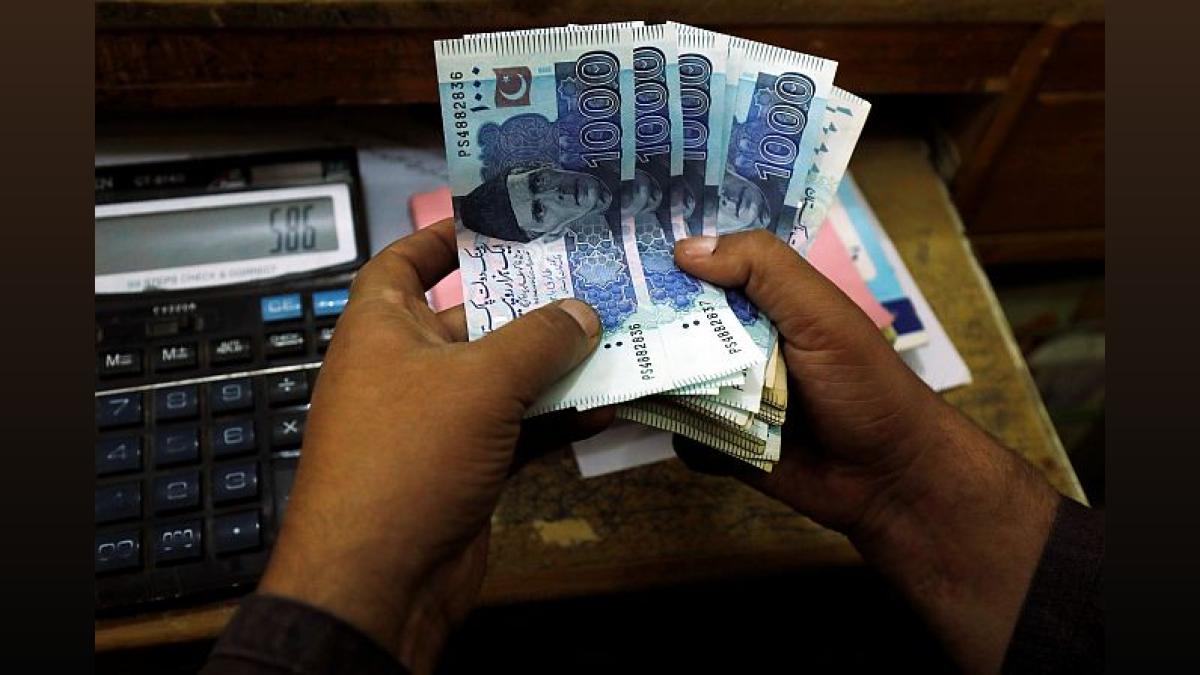
Photograph: Fayaz Aziz/Reuters
Islamabad, Dec 10 (PTI) The latest IMF projections for Pakistan suggest that Pakistan's economy has regained short-term stability, but it remains burdened by high debt, weak investment and slow employment growth, a media report said on Wednesday.
Projections by the International Monetary Fund (IMF), released early on Tuesday alongside the statement announcing a fresh disbursement of around USD 1.2 billion to Pakistan, showed that the country's economic growth was projected to inch up from 2.6 per cent in FY-25 to 3.2 per cent by FY-26, a pace that barely matches population growth in the country of 240.5 million people, reported Dawn.
With a per capita income of USD 1,677, this trajectory points more to economic containment than recovery.
Pakistan's population also continues to grow at a high pace, with mid-2025 official figures citing 2.55 per cent, while World Bank data points to 1.8-1.9 per cent.
In terms of inflation, after averaging 23.4 per cent in FY-24, consumer prices are estimated to have fallen sharply to 4.5 per cent in FY-25, and projected to rise to 6.3 per cent in FY-26, the report said.
Unemployment is projected to fall only modestly from 8.3 per cent in FY-25 to 7.5 per cent in FY-26, underscoring the weak job-creating capacity of the current growth path, it added.
On the fiscal front, government revenue and grants are projected to rise from 12.7 per cent of the gross domestic product (GDP) in FY-25 to 16.3 per cent by FY-26, while expenditure is expected to remain near 20 per cent of GDP, it said.
As a result, the budget deficit is projected to narrow from -6.8 per cent to -4.0 per cent of the GDP. Pakistan is also projected to maintain a primary surplus rising to 2.5 per cent of the GDP, a central IMF benchmark.
Despite this tightening, the public debt burden remains heavy. Total general government debt, including IMF obligations, is projected to hover around 72-73 per cent of the GDP, while government and guaranteed debt is expected to stay near 76 per cent, it said.
Domestic debt accounts for nearly half of the GDP, keeping interest costs elevated amid high domestic borrowing rates.
Foreign investment, however, remains subdued. Foreign direct investment (FDI) is projected at just 0.5-0.6 per cent of the GDP throughout the period under review, it added.
Meanwhile, the 15.4 per cent real effective appreciation of the Pakistani rupee in FY-25 signals a shift towards currency stability after a period of sharp depreciation.
Taken together, the IMF projections for Pakistan suggest that the immediate risk of economic free fall has eased, but the country remains locked into a narrow stabilisation path marked by weak growth, heavy debt and limited relief for households, the report said.
The immediate crisis may have passed, but the challenge of translating stabilisation into sustained, inclusive growth remains unresolved, according to the paper.
Projections by the International Monetary Fund (IMF), released early on Tuesday alongside the statement announcing a fresh disbursement of around USD 1.2 billion to Pakistan, showed that the country's economic growth was projected to inch up from 2.6 per cent in FY-25 to 3.2 per cent by FY-26, a pace that barely matches population growth in the country of 240.5 million people, reported Dawn.
With a per capita income of USD 1,677, this trajectory points more to economic containment than recovery.
Pakistan's population also continues to grow at a high pace, with mid-2025 official figures citing 2.55 per cent, while World Bank data points to 1.8-1.9 per cent.
In terms of inflation, after averaging 23.4 per cent in FY-24, consumer prices are estimated to have fallen sharply to 4.5 per cent in FY-25, and projected to rise to 6.3 per cent in FY-26, the report said.
Unemployment is projected to fall only modestly from 8.3 per cent in FY-25 to 7.5 per cent in FY-26, underscoring the weak job-creating capacity of the current growth path, it added.
On the fiscal front, government revenue and grants are projected to rise from 12.7 per cent of the gross domestic product (GDP) in FY-25 to 16.3 per cent by FY-26, while expenditure is expected to remain near 20 per cent of GDP, it said.
As a result, the budget deficit is projected to narrow from -6.8 per cent to -4.0 per cent of the GDP. Pakistan is also projected to maintain a primary surplus rising to 2.5 per cent of the GDP, a central IMF benchmark.
Despite this tightening, the public debt burden remains heavy. Total general government debt, including IMF obligations, is projected to hover around 72-73 per cent of the GDP, while government and guaranteed debt is expected to stay near 76 per cent, it said.
Domestic debt accounts for nearly half of the GDP, keeping interest costs elevated amid high domestic borrowing rates.
Foreign investment, however, remains subdued. Foreign direct investment (FDI) is projected at just 0.5-0.6 per cent of the GDP throughout the period under review, it added.
Meanwhile, the 15.4 per cent real effective appreciation of the Pakistani rupee in FY-25 signals a shift towards currency stability after a period of sharp depreciation.
Taken together, the IMF projections for Pakistan suggest that the immediate risk of economic free fall has eased, but the country remains locked into a narrow stabilisation path marked by weak growth, heavy debt and limited relief for households, the report said.
The immediate crisis may have passed, but the challenge of translating stabilisation into sustained, inclusive growth remains unresolved, according to the paper.
You May Like To Read




TODAY'S MOST TRADED COMPANIES
- Company Name
- Price
- Volume
- AvanceTechnologies
- 1.17 ( -4.88)
- 87355536
- Alstone-Textiles
- 0.30 ( -3.23)
- 33869654
- Meesho-L
- 170.20 (+ 53.33)
- 30692651
- Vodafone-Idea-L
- 10.73 ( 0.00)
- 30226561
- Spicejet-Ltd
- 34.92 (+ 1.78)
- 21254291
MORE NEWS
 © 2025 Rediff.com India Limited. All rights reserved. Disclaimer - Terms of Service - Privacy Policy - Feedback